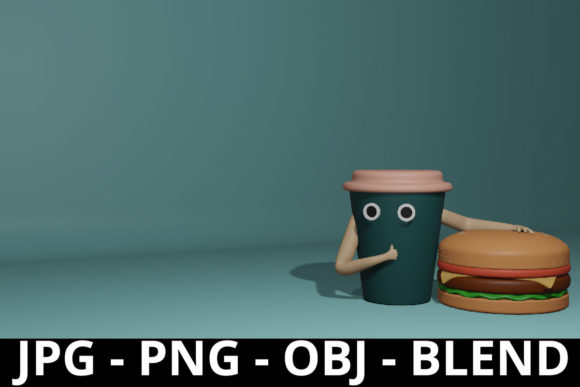
3D Rendering Burger and Coffee Cup: The Ultimate Visual Resource for Modern Design
In the fast-paced world of digital content creation, finding high-quality visuals that capture attention instantly is more important than ever. Whether you are designing a menu for a trendy cafe, creating an advertisement for a fast-food chain, or developing a mobile game, the need for compelling imagery is constant. This is where 3D rendering comes into play. Specifically, a meticulously crafted scene featuring a burger and a coffee cup has become a staple in the design industry. These images are not just pictures; they are sophisticated digital assets that bring warmth, appetite, and energy to any project.
This article explores the significance of 3D rendered food illustrations, focusing on the popular combination of a delicious-looking burger and a steaming coffee cup. We will delve into why this specific pairing is perfect for backgrounds and wallpapers, how it fits into modern workflows, and what makes a ZIP folder containing JPG, PNG, BLEND, and OBJ files a valuable tool for creators at every level.
The Power of Photorealism in Digital Food Marketing
Food photography has always been a critical component of marketing, but traditional photography comes with limitations. Lighting can be tricky, ingredients spoil quickly, and achieving the "perfect" shot often requires multiple takes and expensive equipment. 3D illustration solves these problems by allowing designers to create flawless images from scratch.
When you look at a 3D render of a cheeseburger or a cappuccino, you see details that might be missed in a standard photo. The texture of the toasted bun, the glistening grease on the beef patty, the foam on top of the espresso, and the condensation on the side of the glass are all controlled with precision. This level of detail triggers a psychological response known as appetite appeal. It makes the viewer hungry, thirsty, and eager to engage with the brand being advertised.
Furthermore, 3D rendering allows for infinite customization. If a client wants the lettuce to be brighter green, the cheese to be melted differently, or the steam rising from the coffee to be thicker, these adjustments can be made instantly without re-shooting a physical set. This flexibility makes 3D the preferred choice for fast food illustration and commercial advertising.
Why the Burger and Coffee Combo Works So Well
The combination of a burger and a coffee cup represents a universal narrative: the morning rush, the lunch break, or the late-night study session. It captures the essence of modern life where speed and convenience meet quality. In terms of visual composition, this pairing offers a beautiful contrast.
Color Theory and Balance: A burger typically features warm tones—golden browns of the bread, reds of the tomato, yellows of the cheese, and greens of the lettuce. A coffee cup introduces deep browns, creamy whites (for milk), and perhaps a splash of color from a logo or sleeve. When placed together, these colors create a balanced palette that is visually stimulating yet harmonious.
Thematic Versatility: This duo works across various contexts. It can represent a hearty breakfast, a quick lunch, or a casual cafe experience. Because it is a 3d rendering rather than a photograph, it avoids the "uncanny valley" effect sometimes found in hyper-realistic CGI, leaning instead towards a stylized, cartoon-like aesthetic that is friendly and approachable. This makes it ideal for logos, app icons, and social media posts where a softer, more inviting look is desired.
Understanding the Technical Assets: What's Inside the ZIP Folder?
For designers and developers, the value of a digital asset lies not just in the final image, but in the raw materials provided. A comprehensive ZIP folder for a 3D burger and coffee cup scene typically contains four distinct file types, each serving a unique purpose in the creative process.
- JPG Files: These are compressed raster images perfect for immediate use. They are lightweight and display well on websites, making them ideal for background images, blog headers, or email newsletters where load speed matters.
- PNG Files: Unlike JPGs, PNGs support transparency. This is crucial when you want to place the burger or coffee cup over different colored backgrounds without a white box surrounding it. It allows for seamless integration into design projects, presentations, and UI elements.
- BLEND Files: These are native files for Blender, a powerful open-source 3D software. Having access to the source file means experienced users can modify lighting, textures, camera angles, and even animate the objects. For instance, you could make the steam swirl faster or change the reflection on the table surface.
- OBJ Files: The OBJ format is a universal standard for 3D geometry. It allows the model to be imported into almost any 3D software, including Maya, 3ds Max, Cinema 4D, and Unity. This ensures compatibility regardless of the software stack a studio uses.
By providing all these formats, the asset becomes a versatile tool. Beginners can use the pre-rendered images immediately, while advanced users can deconstruct the scene to learn how professional lighting and texturing are achieved.
Practical Applications in Business and Creativity
The utility of 3D rendered food extends far beyond simple decoration. Here is how businesses and creatives utilize these assets in real-world scenarios:
Menu Design and Branding
Restaurants and cafes often struggle with the cost of hiring a professional photographer for every new item added to their menu. Using a high-quality 3d burger and coffee cup render allows them to maintain a consistent visual identity without the logistical headaches of food styling. They can easily swap out the burger type or add a side of fries to the same base model to create endless variations.
Social Media Engagement
In the age of Instagram and TikTok, visual content is king. A static image of a tasty meal might get likes, but a 3D render that looks slightly larger-than-life stands out. Brands use these isolated objects to create eye-catching stories and reels. The ability to isolate the object (remove the background) allows for creative animations, such as the burger floating or rotating, which increases user engagement.
Gaming and Virtual Environments
Game developers frequently use low-poly or stylized 3D models for food items. A fastfood illustration can serve as an in-game collectible, a vending machine item, or part of the environment in a simulation game. The OBJ file included in the asset pack makes it easy to import these models directly into game engines like Unreal Engine or Unity.
Clarifying Misconceptions About 3D Food
There is a common assumption that 3D renders are only for "unhealthy" or "junk" food, meant to deceive consumers into buying products they shouldn't eat. While it is true that fast food is heavily marketed using CGI, the technology itself is neutral. 3D rendering is used to visualize healthy salads, fresh fruits, and gourmet meals with equal proficiency.
Another misconception is that 3D art is too complex for small business owners. With the availability of pre-made assets like the ZIP folder mentioned earlier, the barrier to entry has lowered significantly. You do not need to be a master 3D artist to use these tools; you simply need to know how to import an image or a basic model into your design software. This democratization of design empowers small startups to compete with large corporations visually.
Conclusion: Elevating Your Visual Storytelling
The intersection of technology and creativity has given rise to stunning visual possibilities. A 3D rendering of a burger and coffee cup is more than just a picture; it is a dynamic asset that bridges the gap between imagination and reality. Whether you are looking for a fresh background for your website, a delicious icon for your app, or a learning resource to understand rendering techniques, these assets offer immense value.
By understanding the different file formats available—from the ready-to-use JPG and PNG to the editable BLEND and OBJ files—you gain control over your creative output. This knowledge allows you to adapt the imagery to fit your specific needs, ensuring that your message is conveyed clearly and effectively. As we move further into a digital-first world, the ability to leverage high-quality 3D illustrations will remain a key skill for anyone involved in design, marketing, or content creation.
So, the next time you see a mouth-watering image of a beef hamburger paired with a steaming espresso, remember the intricate work behind it. It is a testament to the power of 3d illustration to transform simple concepts into compelling visual experiences that resonate with audiences worldwide.