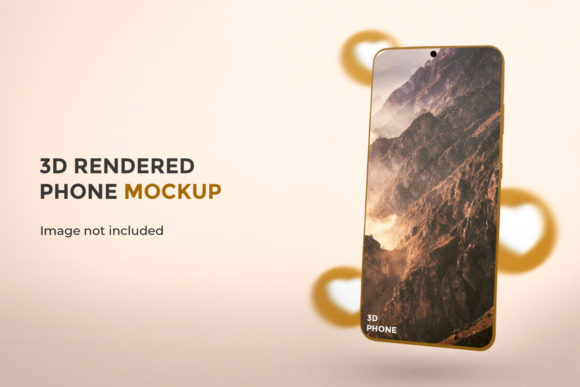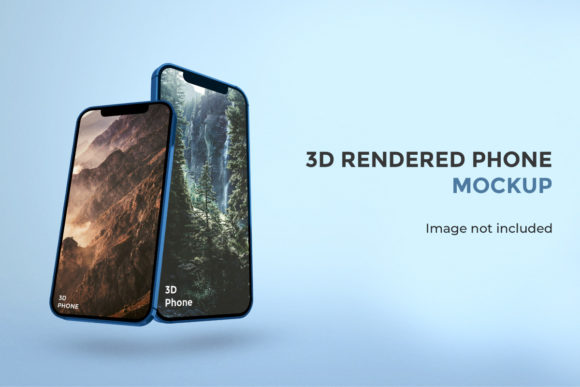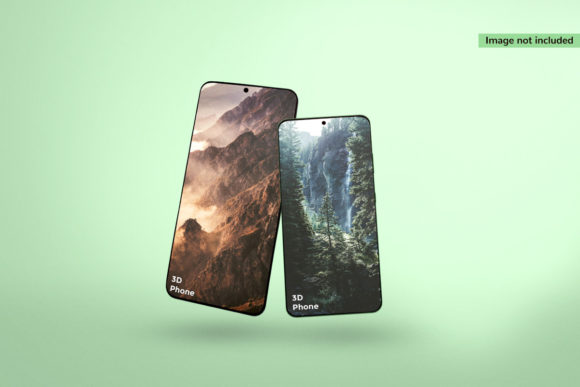
Mobile Mockup 3d: Elevating Your Brand Presentation with Realistic Visuals
In the fast-paced digital landscape where attention is the most valuable currency, how your product looks can be the deciding factor between a casual glance and a committed click. For professionals, creators, entrepreneurs, and small business owners, the gap between a flat design file and a compelling visual story often comes down to context. This is where Mobile Mockup 3d technology transforms from a simple graphic element into a strategic asset. By placing your designs into realistic, three-dimensional environments, you provide stakeholders, clients, and customers with a tangible sense of how your application or interface will perform in the real world.
A high-quality mock-up is not merely about aesthetics; it is about communication. When you present a flat JPEG of an app screen, you are asking your audience to imagine the device, the lighting, and the texture. A realistic mobile mockup removes that cognitive load, allowing them to focus entirely on your content, layout, and user experience. The transition from abstract wireframes to a polished, 3D representation signals professionalism and attention to detail, effectively taking your business to the next level by demonstrating that you understand the nuances of modern presentation.
The Strategic Role of Mobile Mockup 3d in Design Workflows
Integrating Mobile Mockup 3d assets into your workflow requires understanding their specific utility at different stages of a project. They are versatile tools that adapt to the creative process, whether you are in the early planning phases, deep in execution, or preparing for a final launch.
Pre-Production and Planning
Before a single line of code is written or a pixel is finalized, teams often use mockups to validate concepts. In this phase, a realistic 3D model helps stakeholders visualize the end product. It bridges the gap between a sketch and a functional prototype. When pitching ideas to investors or internal management, showing a design embedded in a sleek, photorealistic phone case makes the concept feel immediate and viable. It reduces ambiguity and aligns expectations regarding scale, color contrast, and overall aesthetic.
During Development and Execution
Once the project moves into active development, these assets serve as a constant reference point. Designers and developers can place updated screenshots into the same 3D environment to track consistency. If you are working with a remote team, sharing a layered PSD file ensures everyone sees the exact same context. This prevents the "it looks different on my screen" problem, ensuring that the final output matches the initial vision. The ability to edit smart objects allows for rapid iteration without losing the structural integrity of the scene.
Post-Launch and Marketing
After the product is live, the role of the mockup shifts to marketing and social proof. High-resolution images of your app running on a device are essential for App Store listings, landing pages, and social media campaigns. A static image of an icon rarely converts as well as a dynamic shot of the app interface glowing on a premium smartphone. These visuals tell a story of usability and lifestyle, which is crucial for engaging hobbyists, freelancers, and productivity-minded users who need to see how your tool fits into their daily routine.
Technical Efficiency and Workflow Integration
The true power of a professional mock-up lies in its technical structure. A great advantage of utilizing a dedicated Photoshop PSD-file is the efficiency gained through smart object technology. Unlike rasterized images that require complex editing or background removal, a layered and grouped PSD allows for seamless integration of your designs.
Smart Object Flexibility
When you work with a very easy to edit smart object system, the process becomes non-destructive. You simply double-click the layer, paste your design, save, and the entire 3D scene updates automatically. This feature is critical for maintaining consistency across multiple devices or angles. Whether you need to show your app on an iPhone, a tablet, or a foldable device, the same base file can accommodate various dimensions without requiring you to rebuild the lighting and shadows manually.
Organization and Compatibility
For professionals managing multiple projects, organization is key. High-quality mock-ups come pre-grouped, meaning layers are logically separated. You can adjust the background, change the lighting direction, or swap the device color independently of your main design. This modularity ensures that your workflow remains smooth even when client feedback necessitates changes. Furthermore, because these files are standard PSD formats, they are compatible with the vast majority of design software ecosystems used by marketers, educators, and publishers today.
- Speed: Reduce turnaround time by avoiding manual rendering of 3D scenes.
- Consistency: Maintain brand colors and lighting across all marketing materials.
- Scalability: Easily adapt one design for multiple screen sizes and orientations.
- Quality Control: Ensure that text remains crisp and edges remain sharp regardless of zoom level.
Practical Implementation Tips for Maximum Impact
To get the most out of your Mobile Mockup 3d resources, it is important to approach them with a mindset of practical implementation rather than just decoration. Here are several observations on how to integrate these tools effectively into your business workflows.
Context Matters
While the device itself is important, the environment surrounding it tells the real story. A mockup placed on a clean white background works well for technical documentation or app store icons. However, for lifestyle marketing or blog posts targeting entrepreneurs and bloggers, consider using mockups that include subtle environmental cues—a coffee shop table, a modern office desk, or a hand holding the device. This contextualization helps your audience visualize the product in their own lives, increasing emotional engagement and conversion rates.
Maintain Realism
One common pitfall is ignoring the lighting and reflections in the mockup file. Even if you have a beautiful design, if the lighting on the screen does not match the ambient light of the scene, the image will look fake. Use the adjustment layers provided in the PSD to tweak brightness and contrast so your design feels integrated into the photo-realistic surface. This attention to detail reinforces trust and credibility, which are essential for any business looking to establish authority in its niche.
Iterative Testing
Do not treat the mockup as a static final step. Use it as a testing ground. Present different versions of your design within the same 3D frame to A/B test which visual hierarchy resonates better with your target audience. Since the file is layered and grouped, you can quickly swap out headlines, buttons, or color schemes to see which combination drives the best results before committing to full-scale development or ad spend.
Bridging the Gap Between Concept and Reality
The journey from an idea to a market-ready product involves countless decisions and adjustments. Tools like Mobile Mockup 3d act as the bridge that connects abstract concepts with concrete reality. They allow creators to bypass the limitations of 2D screens and offer a glimpse into the future state of their products. For educators and students, these mockups serve as excellent teaching aids for demonstrating UI/UX principles. For freelancers and agencies, they are indispensable assets for delivering premium presentations that justify higher rates.
The ease of use associated with these tools means that even those with limited technical expertise can produce professional-grade visuals. You do not need to be a 3D artist to create stunning imagery. With a single Photoshop PSD-file, you have access to a library of possibilities. The process is streamlined: open the file, insert your design, adjust the settings, and export. This simplicity empowers small business owners and solo practitioners to compete visually with larger corporations.
Ultimately, the value of a realistic mobile mockup extends beyond the visual appeal. It represents a commitment to quality and a respect for the viewer's time. By providing clear, high-fidelity representations of your work, you reduce friction in the decision-making process for clients and customers. Whether you are launching a new app, updating a brand identity, or showcasing a portfolio, integrating Mobile Mockup 3d into your strategy is a practical step toward achieving clarity, efficiency, and success.
As you move forward with your next project, consider how these tools can enhance your narrative. Look for resources that offer high-quality, editable files that fit seamlessly into your existing toolkit. By prioritizing preparation, compatibility, and usability, you ensure that your visual communications are as robust as the products or services you offer. In a world saturated with information, the ability to present your work with realism and precision is a distinct competitive advantage that can propel your brand to new heights.