3D Dragonfly - Layered Dragonfly: A Comprehensive Evaluation for Crafters
In the world of paper crafting and digital design, finding a cut file that balances aesthetic complexity with ease of assembly can be challenging. The 3D Dragonfly - Layered Dragonfly stands out as a specific solution designed to bridge the gap between flat vector graphics and dimensional art. This layered dragonfly svg is engineered specifically for cardstock applications, offering a distinct advantage over standard single-layer designs by utilizing depth to create a lifelike appearance. Understanding the mechanics of this product, its file compatibility, and how it fits into a broader crafting ecosystem is essential for makers looking to elevate their projects.
Distinguishing Features of the Layered Design
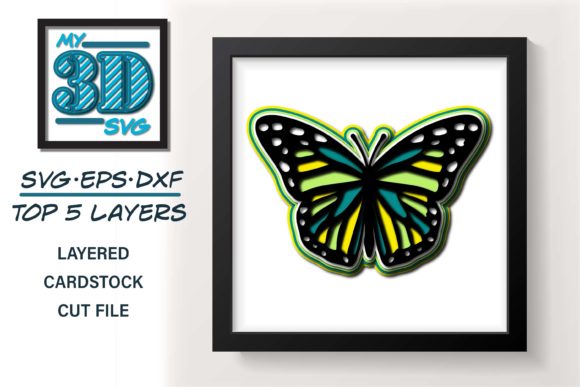
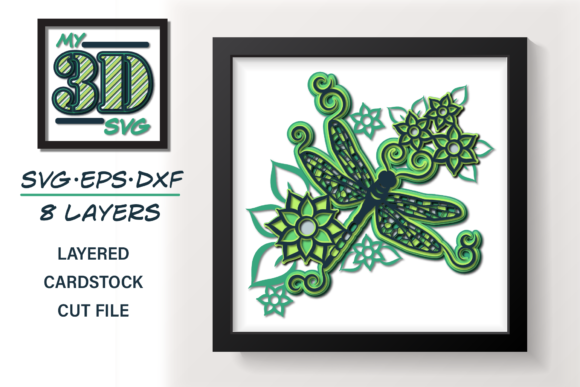
The primary characteristic that sets the 3D Dragonfly - Layered Dragonfly apart from generic insect silhouettes is its structural approach. Rather than cutting a single silhouette that relies on paint or marker work to suggest dimension, this design employs a multi-piece construction method. The file consists of 5 total layers, each representing a specific component of the dragonfly's anatomy. This segmentation allows the crafter to assemble the wings, body, and head in a way that creates physical separation between elements.
This layering technique transforms a two-dimensional image into a three-dimensional object. When assembled correctly, the overlapping layers cast subtle shadows and provide a tactile quality that flat designs lack. For users working with cardstock, this distinction is critical. Cardstock possesses enough rigidity to hold these shapes without collapsing, yet remains pliable enough to be scored and glued. The result is a dragonfly that appears to hover rather than lie flat against the background. This makes it particularly effective for greeting cards, scrapbook embellishments, and decorative wall art where visual depth is a priority.
File Format Versatility and Software Compatibility
One of the most significant considerations when purchasing digital cut files is the software environment you currently utilize. The 3D Dragonfly - Layered Dragonfly package addresses this by providing a comprehensive suite of formats, ensuring accessibility regardless of your preferred hardware or operating system. This inclusivity removes barriers to entry for crafters who may use different ecosystems for their projects.
- SVG (Scalable Vector Graphics): Included in the download, this format is the industry standard for web-based and cross-platform vector editing. It is fully compatible with Cricut Design Space, allowing users to import the design directly into the cutting machine interface for easy resizing and weeding.
- DXF (Drawing Exchange Format): Specifically optimized for Silhouette Studio, this format ensures precise alignment of the five layers within the Silhouette Designer Edition. DXF files are known for their reliability in maintaining path integrity during the cutting process.
- EPS (Encapsulated PostScript): This professional-grade format offers high compatibility with Adobe Illustrator, Make the Cut, Corel Draw, and Inkscape. Users who require advanced manipulation of paths, colors, or node editing will find the EPS version invaluable for customizing the dragonfly before cutting.
The inclusion of these diverse formats means that a user does not need to purchase separate versions of the design if they switch machines or software later. Whether you are a hobbyist using a Cricut Maker at home or a professional designer utilizing Corel Draw for client work, the Layered Dragonfly remains accessible. This flexibility reduces the risk of file incompatibility issues, which are common pain points in the digital crafting market.
Comparative Analysis: Layered vs. Single-Layer Options
When evaluating the 3D Dragonfly - Layered Dragonfly against other options, the most direct comparison is between layered 3D kits and traditional single-layer cut files. Single-layer designs typically involve cutting one shape and adhering it directly to a backing. While efficient, they often lack the "wow" factor required for premium projects. To achieve depth with a single layer, crafters must rely on techniques like folding, scoring, or adding foam tape underneath, which can be time-consuming and inconsistent.
In contrast, the 5-layer structure of the 3D Dragonfly integrates depth into the design itself. The tradeoff here is primarily time. Assembling a layered dragonfly requires more steps than applying a single sticker or cutout. You must cut five separate pieces, sort them, and carefully glue them together. However, the reward is a significantly higher-quality end product. The layered approach also offers superior color customization. Because each layer is distinct, crafters can mix and match colors across the wings and body. This opens up creative possibilities that are impossible with pre-colored single-layer prints or uniform solid-color cuts.
Another point of comparison involves digital-only assets versus physical kits. Some products sell a pre-assembled plastic or metal die-cut dragonfly. While convenient, these limit material choices to what the manufacturer provides. The 3D Dragonfly - Layered Dragonfly SVG empowers the user to choose their own materials. You might opt for metallic gold cardstock for a formal invitation, matte pastel paper for a baby shower, or textured kraft paper for a rustic theme. This control over material selection is a key advantage of the digital layered format over physical pre-made items.
Strategic Applications and Best-Fit Scenarios
Deciding whether the 3D Dragonfly - Layered Dragonfly is the right choice depends heavily on the intended application. This design excels in scenarios where visual impact and texture are paramount. For instance, in wedding stationery, a 3D dragonfly can serve as an elegant focal point on a table number or a place card, catching the light differently than a flat print. Similarly, in children's room decor, the ability to vary colors allows parents to match the dragonfly to specific nursery themes, such as blues for a boy's room or pinks for a girl's room, without needing multiple purchases.
The design is also highly suitable for mixed-media art. Artists can combine the cut dragonfly with watercolor backgrounds, embroidery, or fabric scraps. The 5-layer structure provides a sturdy base that can withstand additional adhesives and media without warping. Furthermore, for educational purposes, the assembly process serves as a practical exercise in fine motor skills and spatial reasoning for older children and teens learning about geometry and engineering through crafting.
Evaluating Limitations and Decision Factors
While the benefits are clear, it is important to acknowledge the limitations inherent to this type of project. The primary constraint is the skill level required for assembly. Beginners who have never worked with layered paper crafts may find the gluing process frustrating. Misalignment of the five layers can ruin the symmetry of the dragonfly, leading to a distorted appearance. Therefore, patience and precision are necessary prerequisites. Additionally, the cost of materials increases slightly compared to single-layer projects, as you are using more cardstock to create the full effect.
Another consideration is the durability of the final piece. Because the wings are separated by small gaps to allow for movement and shadow, the structure can be more fragile than a solid cutout. If the dragonfly is intended for outdoor use or frequent handling, extra reinforcement with strong adhesives or laminating may be required. For indoor display or short-term events like parties, however, the standard cardstock construction is generally sufficient.
When deciding between the 3D Dragonfly - Layered Dragonfly and alternative resources, ask yourself: Do I need depth? Do I want to experiment with color combinations? Am I willing to spend extra time on assembly for a better result? If the answer to these questions is yes, then this layered design is likely the optimal choice. Conversely, if speed and simplicity are the top priorities, a single-layer silhouette or a pre-printed sticker might be more appropriate.
Creative Customization Potential
A unique strength of the 3D Dragonfly - Layered Dragonfly lies in its modularity. Since the file separates the components, users are not restricted to a single color palette. One could create a monochromatic look by using different shades of blue for each layer, creating a gradient effect. Alternatively, one could use contrasting colors, such as a black body with neon green wings, to create a striking, modern aesthetic. The ability to mix and match colors encourages experimentation, allowing crafters to develop their own signature styles rather than simply following a preset template.
In conclusion, the 3D Dragonfly - Layered Dragonfly represents a thoughtful intersection of digital convenience and traditional craftsmanship. By offering multiple file formats and a robust 5-layer structure, it caters to a wide range of users from casual hobbyists to seasoned designers. While it demands more effort than simple cutouts, the resulting dimensional beauty and customizable nature make it a valuable asset for any serious crafter looking to add sophistication to their projects.