Colorado, 3D Layered Tropical: A Practical CNC and Laser Cutting Resource
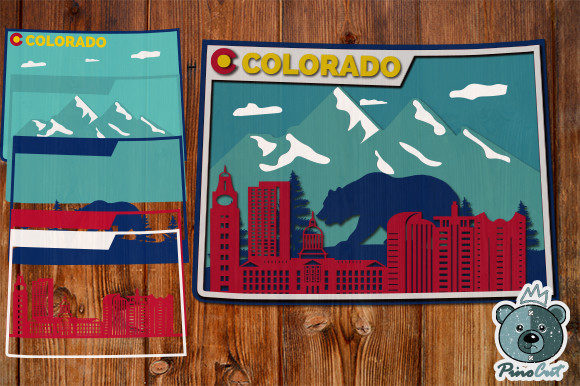
In the landscape of digital fabrication, finding a design that balances aesthetic appeal with manufacturing efficiency is often a challenge. The Colorado, 3D Layered Tropical project addresses this gap by offering a specialized vector drawing tailored for plywood construction. This resource is not merely a static image; it is a comprehensive cutting plan designed specifically for CNC routers and laser cutters. By providing a fully archived electronic format, the project empowers creators to bypass the time-consuming process of drafting complex layered structures from scratch.
The core value of this asset lies in its adaptability. Whether you are a small business owner looking to produce decorative wall art or an educator teaching the fundamentals of additive manufacturing, the Colorado, 3D Layered Tropical file serves as a robust starting point. It allows users to download the archive, modify the layout to suit specific spatial requirements, and proceed directly to production. This workflow significantly reduces the barrier to entry for high-quality 3D woodworking projects.
Technical Specifications and File Usability
At the heart of this project is the precision of the vector drawing. Unlike raster images that lose quality when scaled, the provided files consist of clean lines and paths that are essential for machine toolpaths. The design is optimized for laser cutting, ensuring that the kerf (the width of the material removed by the laser) is accounted for in the fitment of the layers. This attention to detail is critical for achieving the intended depth and structural integrity of the final piece.
The project comes in an archived format, which typically includes multiple file types compatible with various CAD and CAM software suites. This versatility means that professionals using industry-standard tools can import the data without compatibility issues. Once downloaded, the user has the freedom to alter the design layout. For instance, one might adjust the scale to fit a larger wall panel or rearrange the tropical motifs to create a custom pattern. This flexibility transforms a single purchase into a scalable solution for diverse applications.
Material Selection and Structural Integrity
While the design is versatile, the choice of material plays a pivotal role in the outcome. The project explicitly recommends using 3mm plywood. This thickness is a strategic choice for several reasons. First, it is thin enough to allow for intricate cuts without excessive burn marks from a laser cutter, yet thick enough to provide sufficient rigidity for the 3D layering effect. Second, 3mm plywood is widely available and cost-effective, making it ideal for mass production scenarios where profit margins matter.
If the project is intended for a permanent installation or a heavy-duty application, solid wood could be substituted, though this would require adjustments to the cutting parameters. However, for most decorative purposes, the 3mm plywood recommendation ensures a lightweight yet durable final product. The layered nature of the Colorado, 3D Layered Tropical design relies on the precise stacking of these sheets to create depth. If the material is too thick, the cumulative height may become unwieldy; if too thin, the individual layers may lack definition.
Economic Viability and Mass Production Potential
One of the strongest arguments for adopting this project is its economic efficiency. Traditional methods of creating 3D wooden art often involve hand-carving or assembling pre-cut pieces, both of which are labor-intensive and prone to human error. In contrast, the Colorado, 3D Layered Tropical vector plan automates the complexity. The cutting plan is optimized to minimize waste, a crucial factor when working with sheet goods like plywood.
For entrepreneurs and freelancers, this translates to faster turnaround times. Since the assembly process is described as easy, the labor cost per unit drops significantly. This makes the product highly suitable for mass production. A workshop can set up a batch run, cutting dozens of identical units in a single session, then assemble them rapidly. The consistency of machine cutting ensures that every unit produced matches the original design intent, maintaining a high standard of quality control that is difficult to achieve with manual techniques.
Furthermore, the "pay once, use many times" model of digital assets offers long-term value. After the initial investment, there are no recurring licensing fees for each unit produced. This scalability is particularly beneficial for marketing agencies or publishers who need to generate large volumes of branded merchandise or educational materials quickly.
Post-Processing and Customization
The raw cut pieces serve as a blank canvas for further creativity. The instructions suggest that after cutting, the product can be painted in any color or decorated with additional elements. This open-ended approach allows for significant customization. A corporate client might request a monochromatic scheme to match their brand guidelines, while a residential customer might prefer a natural wood finish or a vibrant, multi-colored paint job.
The smooth edges resulting from a well-calibrated laser cutter mean that minimal sanding is required before painting, saving additional time in the finishing stage. Decorative elements can be added through staining, decoupage, or even the attachment of hardware for mounting. This adaptability ensures that the Colorado, 3D Layered Tropical design remains relevant across different interior design trends and functional requirements.
Target Audience and Application Scenarios
The utility of this project extends across a wide demographic. For educators, it provides an excellent case study for courses on digital fabrication, geometry, and material science. Students can learn how 2D vectors translate into 3D objects, gaining hands-on experience with CNC machines and lasers.
Small business owners and creators will find the project particularly valuable for expanding their product lines. The tropical theme offers a fresh aesthetic that fits well with modern bohemian, coastal, or biophilic design trends. By offering customizable wall art, businesses can cater to niche markets without the overhead of designing new products for every order.
Marketers and bloggers interested in DIY content can utilize the project to create engaging tutorials or behind-the-scenes content. The visual impact of a layered tropical scene is inherently shareable, making it a strong candidate for social media engagement. Additionally, publishers might consider including the design in instructional books or magazines focused on woodworking and crafting.
Limitations and Considerations
While the project is robust, it is important to acknowledge certain limitations. The success of the final product is heavily dependent on the calibration of the cutting equipment. A poorly tuned laser cutter may cause burning or warping, especially on the thinner 3mm plywood. Users must ensure their machines are properly maintained and that the cutting parameters (speed, power, air assist) are optimized for the specific type of plywood being used.
Additionally, the assembly process, while described as easy, requires patience and precision. Aligning multiple layers perfectly to achieve the desired 3D effect demands a steady hand and potentially the use of alignment jigs. For beginners, this learning curve should be factored into the project timeline. Furthermore, while the design is editable, users should have a basic understanding of vector editing software to make meaningful modifications to the layout.
Final Assessment
The Colorado, 3D Layered Tropical project represents a thoughtful intersection of digital design and physical manufacturing. It strips away the complexities of 3D modeling, allowing users to focus on the creative and productive aspects of their work. By providing a ready-to-use, economically viable, and aesthetically pleasing vector plan, it serves as a powerful tool for anyone looking to enter the market of 3D wooden decor.
Its suitability for mass production, combined with the ease of modification and post-processing, makes it a standout resource in the field of CNC and laser cutting. Whether for professional commercial output or personal hobbyist projects, the asset delivers consistent results and high practical value. For those seeking to streamline their workflow and produce high-quality 3D art, this project offers a reliable and efficient path forward.