Mastering the Bold 3D Text Effect: The Ultimate Guide to Editable Vector Design
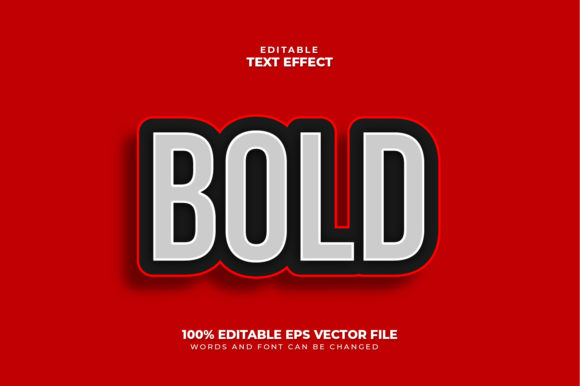
In the fast-paced world of digital design, few elements command attention quite like a Bold 3D Text Effect. Whether you are designing a movie poster, a gaming logo, or a dynamic social media banner, three-dimensional typography adds depth, drama, and a tangible presence that flat text simply cannot achieve. However, the true power of this visual style lies not just in its aesthetic appeal, but in its flexibility. This is where the concept of an Editable Text Style becomes absolutely critical for modern creators.
Many designers struggle with static graphics that look impressive but are impossible to modify. You might find a stunning 3D title, only to realize that changing a single letter requires starting from scratch. That frustration ends when you utilize a fully editable vector design. By understanding how to leverage these tools, you can transform your workflow from rigid and time-consuming to fluid and creative.
The Core Advantage: Fully Editable Vector Design
When we talk about a "fully editable vector design," we are referring to a file structure that preserves the mathematical integrity of every line, curve, and color stop. Unlike raster images (like JPEGs or PNGs) which become pixelated when scaled, vector files remain crisp at any resolution. But beyond scalability, the defining feature of this specific design approach is its editability.
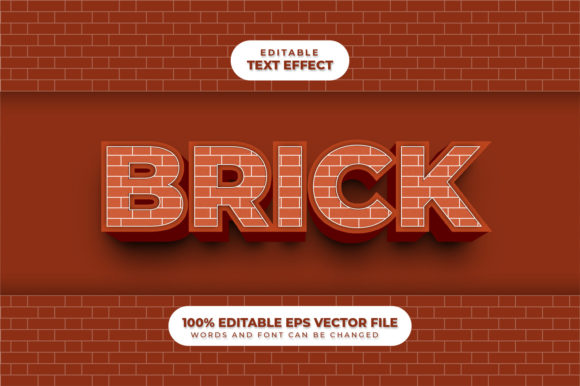
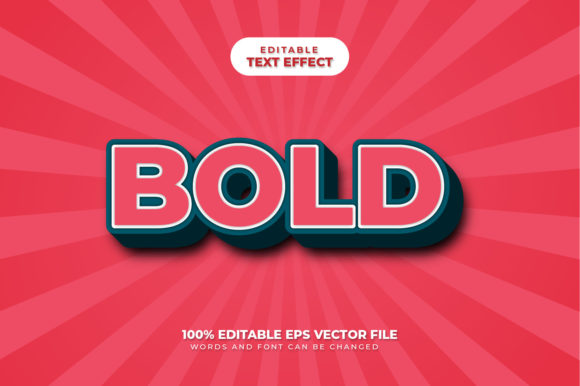
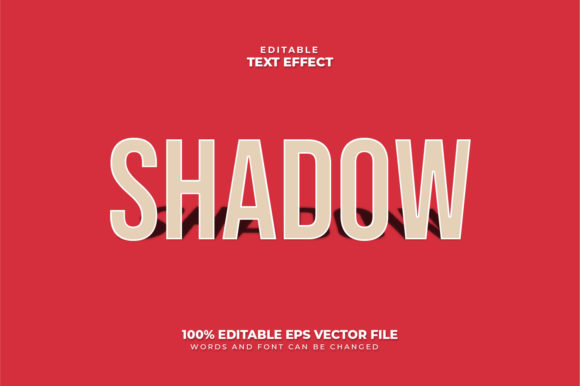
This is not a font, just Text Font Effect design. It is a sophisticated layer of styling applied to standard text objects. Because it relies on standard vector paths rather than embedded bitmap textures, you retain complete control over the content. You can enlarge or reduce it to the size that you want without losing a single pixel of quality. This means you can take a design intended for a business card and instantly adapt it for a massive billboard, knowing the Bold 3D Text Effect will render perfectly.
The ability to change words, fonts, and sizes easily is the cornerstone of efficiency. In professional environments, client requests often change at the last minute. A client might love the style but need the company name updated, or they might want the headline shortened. With an Editable Text Style, you don't need to redraw the 3D geometry. You simply click, type the new text, and watch the effect automatically re-apply itself.
How It Works: Click and Type Technology
The mechanics behind this technology are deceptively simple yet incredibly powerful. Most high-quality vector designs of this nature are built within software like Adobe Illustrator. The process is designed to mimic natural typing while maintaining complex graphical properties.
Just click and type the text you want. This instruction sounds basic, but it represents a significant leap forward in design automation. When you interact with the text object, the underlying code recognizes the input and applies the pre-set gradients, bevels, shadows, and extrusions that create the 3D illusion. This is why you see the label "100 Vector 100 Editable." Every single character is an independent entity that can be manipulated.
This functionality allows for rapid prototyping. Imagine you are working on a campaign for a video game. You have ten different character names to test. Instead of creating ten separate files, you create one master file. You select the text tool, swap out "Hero" for "Villain," then "Mage," then "Warrior," and adjust the colors if necessary. The entire process takes seconds. This speed is invaluable when iterating through concepts to find the perfect visual balance.
Beyond the Default: Customization and Flexibility
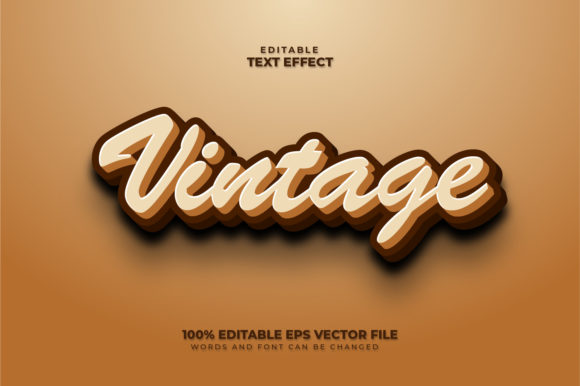
One of the most common misconceptions about 3D text effects is that you are stuck with the preset look. While the base design provides a strong foundation, the beauty of an Editable Text Style is its openness to customization. You can use the font in the design or any font you want.
This freedom opens up a world of stylistic possibilities. Perhaps the default font feels too corporate for your edgy brand identity. No problem. Select the text, open your font menu, and switch to a handwritten script or a futuristic sans-serif. The 3D effect—comprising the side walls, the lighting, and the shadow—will adapt to the new shape of the letters. This ensures that the Bold 3D Text Effect remains consistent even as the personality of the typography shifts.
You can also manipulate the size parameters. If you need the text to wrap around a circular element or fit into a narrow sidebar, you can resize the bounding box. Because the design is vector-based, the aspect ratio and the thickness of the 3D extrusion scale proportionally. This prevents the distortion that plagues non-vector assets, ensuring your text always looks professional.
Integrating Into Modern Workflows
How does this fit into the daily lives of graphic designers, marketers, and content creators? In today's multi-platform landscape, consistency is key, but adaptation is king. A marketing team might need a cohesive set of assets for email headers, website banners, and print flyers. Using a static image would require manual resizing and re-rendering for each format, leading to potential quality loss and wasted hours.
By adopting a workflow centered on 100 Vector 100 Editable assets, teams can centralize their branding. The design team creates one robust template with a Bold 3D Text Effect. The marketing team then uses this template to generate variations for different campaigns. They change the copy, perhaps tweak the hue to match a seasonal theme, and export the final result. This streamlines the production pipeline significantly.
Furthermore, this approach is essential for agencies that handle multiple clients simultaneously. The ability to quickly swap out client names and slogans without compromising the structural integrity of the design allows for higher throughput. It reduces the barrier to entry for junior designers who might be intimidated by complex 3D modeling but are comfortable with basic text manipulation.
Practical Considerations and Best Practices
While the benefits are clear, there are practical factors to consider when choosing and using these designs. First, ensure your software environment supports the features required. Since this is an Adobe Illustrator Text Effect, compatibility with other programs like Photoshop or InDesign is generally good, but some advanced 3D rendering settings might need to be flattened for web optimization.
Second, consider the complexity of the text. While you can change the text easily, extremely long sentences or very small point sizes can sometimes distort the 3D effect if the original design wasn't optimized for those extremes. Always preview your text at the intended output size before finalizing the project.
Third, think about file management. Because these files contain editable layers and effects, they can sometimes become large if not organized correctly. Keep your layers named logically and group your text objects appropriately. This makes it easier for future users to navigate the file and understand which parts of the Bold 3D Text Effect are linked to the text and which are decorative elements.
Why Choose Editable Over Static?
The choice between a static image and an editable vector design often comes down to long-term value. A static image is a snapshot; once it is saved, it is fixed. An editable vector design is a living asset. It grows and changes with your needs. For businesses looking to build a lasting brand identity, investing in 100 Vector 100 Editable resources is a strategic decision.
The ability to Just Click and Edit removes the friction from the creative process. It empowers designers to experiment more freely. You can try five different headlines in the time it used to take to render one. This experimentation often leads to better, more impactful designs. The Editable Text Style acts as a catalyst for creativity, allowing you to focus on the message rather than the mechanics of construction.
Ultimately, the goal of any design is communication. A Bold 3D Text Effect grabs attention, but an Editable Text Style ensures that the message is accurate, timely, and adaptable. Whether you are a seasoned pro or just starting out, mastering these tools is essential for staying competitive in the visual arts. Embrace the flexibility, enjoy the speed, and let your text do the heavy lifting.